DESERT ROSE

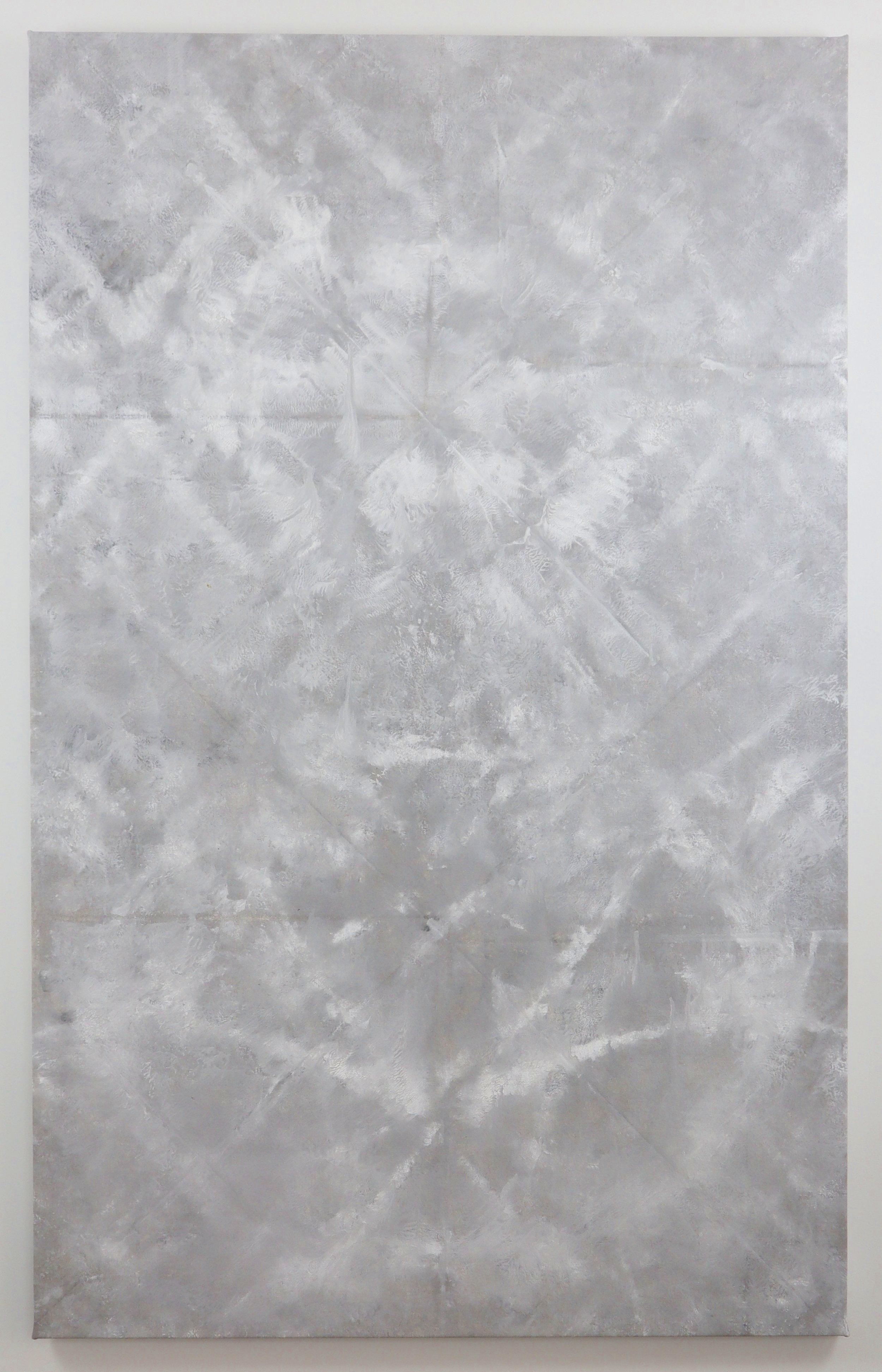
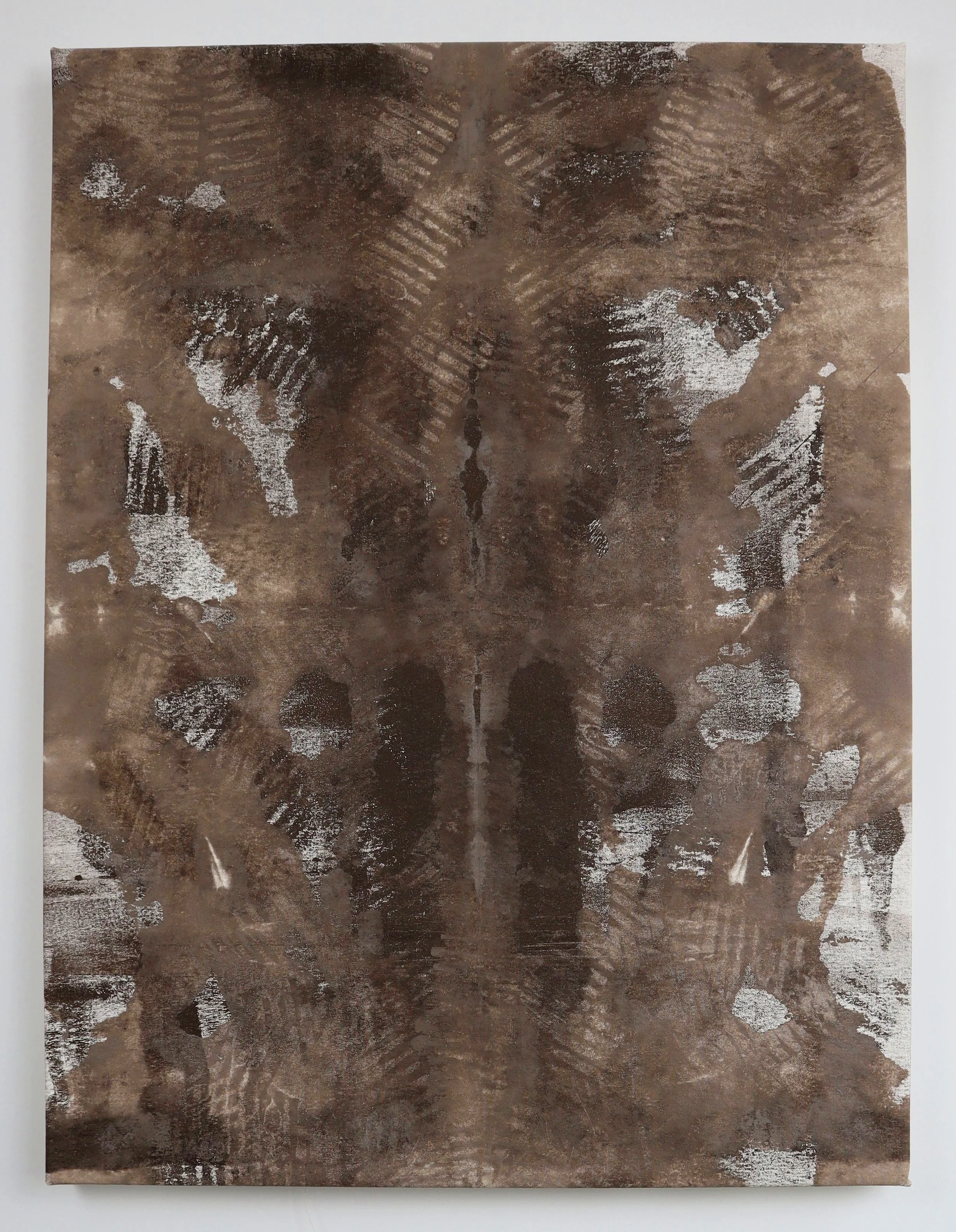
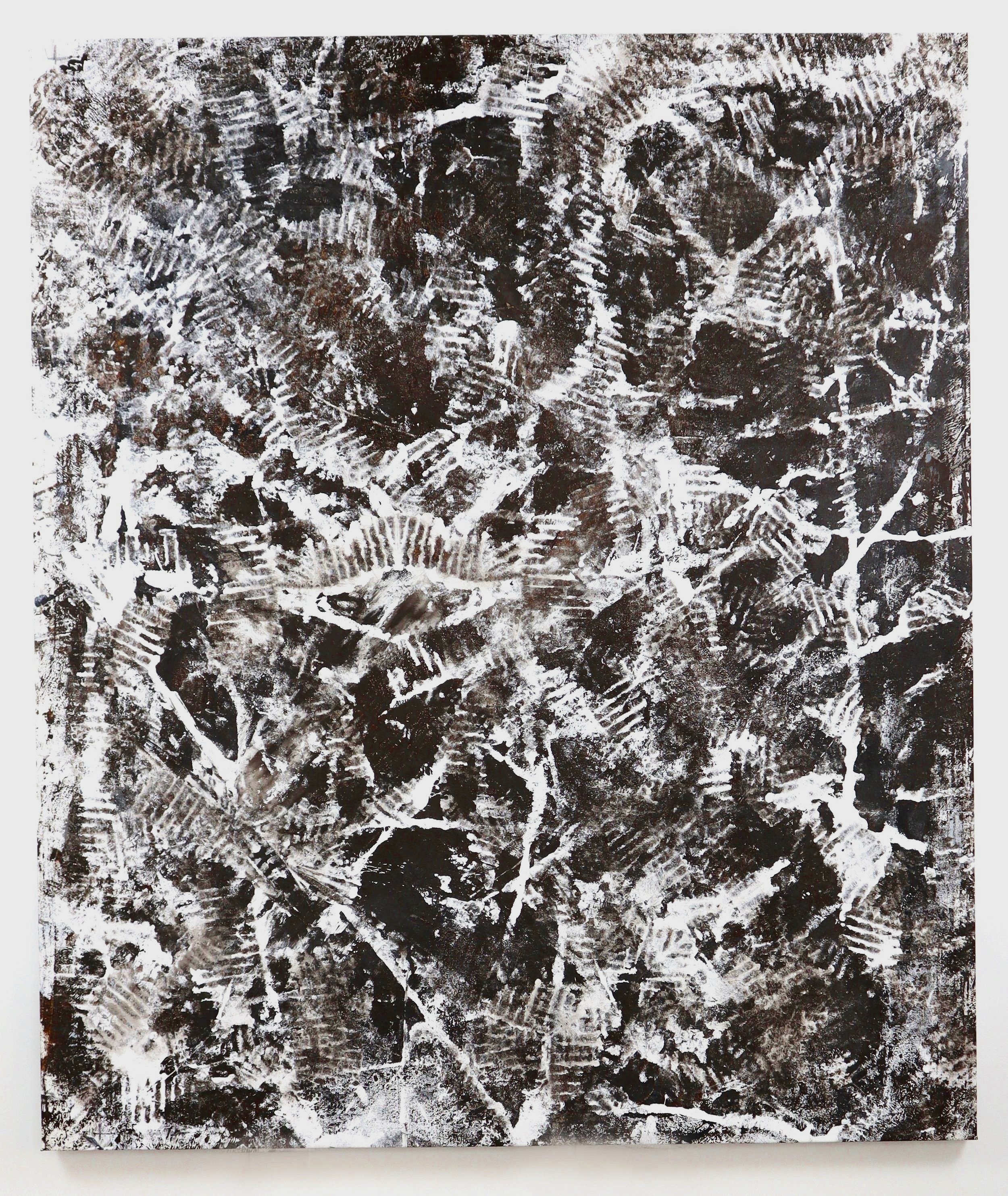
Desert Rose began on the floor, with un-stretched canvas and the weight and movement of my body.
Extending the physical investigations of Casting Paintings, I folded, compressed, rolled, pressed, and imprinted the surface, responding to what each action revealed. The paintings accumulated traces of contact, effort, and removal. Making them became a way of encountering parts of myself I could feel before I could name.
The series emerged during a period of questioning who I was, what I had inherited, and how I was changing. Ancestry, Mexican folklore, and the desert entered that inquiry alongside meditation, Reiki, and Eastern philosophy. Movement, thought, spoken words, and physical labor became part of a continuous studio practice. The finished surfaces hold what remains of those private acts.
I am drawn to the delicacy that can emerge through such force. Muted color, pale impressions, and intricate structures suggest tissue, bone, fluid, and the connective material of a body. Some passages ask the viewer to come close before they become visible. I sense something living within them—a presence that is familiar without being fully identifiable.
The title takes its name from the rose-like mineral formations found in arid landscapes. For me, Desert Rose became an image of formation through difficult conditions: something delicate taking shape through time and pressure. It gave me a way to think about identity as something continually formed through inheritance, experience, and the changes we live through.
Looking at these paintings now, I also imagine them as studies made by someone or something in a future time, examining the traces of living humanity. I wonder what could be understood about us through these remnants: the vulnerability of our bodies, the force of our feelings, the beauty of having been alive.
This is where the work holds a future memory for me. These surfaces belong to a particular time in my life, yet they invite me to look at that time from a distance—to feel its preciousness, and the ache of knowing it could never remain unchanged. I leave room for the viewer to bring their own recognition to that encounter: a sense of life passing, leaving traces, becoming memory.

A Warrior of Light. Acrylic on canvas. 45 x 65 inches, 2023

Reaching Out to Us from the Spirit World. Acrylic on canvas. 40 x 64 inches, 2023

Root Chakra Mother Earth. Acrylic on canvas. 30 x 40 inches, 2023

Desert Energy Flows Through Me. Acrylic on canvas. 30 x 40 inches, 2023

We Are Here for a Reason. Acrylic on canvas. 45 x 65 inches, 2023

Two Wolves No. 2. Acrylic on canvas. 26 x 42 inches, 2023

Generator of Love. Acrylic on canvas. 30 x 40 inches, 2023

Generator of Light. Acrylic on canvas. 30 x 40 inches, 2023
Born of Water, Wind, and Sand. Acrylic on canvas. 53 x 64 inches, 2023

The Legend of Pavla Blanca No. 1. Acrylic on canvas. 30 x 40 inches, 2023

The Legend of Pavla Blanca No. 2. Acrylic on canvas. 30 x 40 inches, 2023

Desert Rose. Acrylic on canvas. 49 x 58 inches, 2023